If you’re looking for a dish that combines vibrant colors, bold flavors, and wholesome ingredients, this Korean Beef Bibimbap Bowl is the perfect choice. Packed with marinated beef, sautéed vegetables, fluffy white rice, and a perfectly fried egg, all drizzled with spicy gochujang sauce, this dish is a feast for both the eyes and the palate. Whether you’re a fan of Korean cuisine or just love experimenting with new recipes, this bibimbap bowl is sure to become a favorite in your kitchen. Let’s dive into how you can make this delicious meal at home!
Why You’ll Love This Recipe
This Korean Beef Bibimbap Bowl is a celebration of textures, colors, and flavors. The tender marinated beef pairs beautifully with crisp sautéed vegetables, while the creamy yolk of the fried egg ties everything together. The spicy-sweet gochujang sauce adds a kick that elevates the dish to another level. Not only is it visually stunning, but it’s also customizable, allowing you to adjust the spice level or swap ingredients to suit your taste. Plus, it’s quick and easy to prepare, making it ideal for busy weeknights or casual dinners.
Ingredients
(Tip: You’ll find the full list of ingredients and measurements in the recipe card below.)
Here’s what you’ll need to create this mouthwatering Korean Beef Bibimbap Bowl:
- 1/2 lb beef sirloin, thinly sliced
- 2 tablespoons soy sauce
- 1 tablespoon sesame oil
- 1 garlic clove, minced
- 2 cups cooked white rice
- 1 carrot, julienned
- 1 zucchini, sliced
- 2 eggs
- 2 tablespoons gochujang (Korean chili paste)
- Sesame seeds, for garnish
Each ingredient plays a vital role in crafting the dish’s signature taste and presentation. The marinade infuses the beef with savory umami notes, while the fresh vegetables add crunch and color. The gochujang sauce brings heat and depth, and the sesame seeds provide a nutty finishing touch.
Step-by-Step Instructions
Let’s walk through the process step by step to ensure your Korean Beef Bibimbap Bowl turns out perfectly every time.
1. Marinate the Beef
In a medium mixing bowl, combine 2 tablespoons of soy sauce, 1 tablespoon of sesame oil, and 1 minced garlic clove. Add the thinly sliced beef sirloin to the mixture, ensuring each piece is evenly coated. Allow the beef to marinate for at least 15-20 minutes. For deeper flavor, you can marinate it for up to an hour in the refrigerator.
2. Prepare the Vegetables
While the beef is marinating, prep your vegetables. Julienne the carrot into thin strips and slice the zucchini into thin half-moons. Keep them separate, as they will be sautéed individually to maintain their distinct textures and flavors.
3. Cook the Rice
If you don’t already have cooked rice ready, now is the time to prepare it. Rinse 1 cup of uncooked white rice under cold water until the water runs clear. Combine the rinsed rice with 2 cups of water in a pot, bring it to a boil, then reduce the heat to low, cover, and simmer for 18-20 minutes. Fluff the rice with a fork before serving.
4. Sauté the Vegetables
Heat a small amount of sesame oil in a skillet over medium heat. Add the julienned carrots and sauté for 2-3 minutes, just until they soften slightly but retain their crunch. Remove the carrots from the skillet and set aside. In the same skillet, add a bit more sesame oil if needed, then sauté the zucchini slices for 2-3 minutes until tender but not mushy. Set the zucchini aside with the carrots.
5. Cook the Beef
Using the same skillet, increase the heat to medium-high and add a small amount of sesame oil. Add the marinated beef slices in a single layer, being careful not to overcrowd the pan. Cook the beef for 2-3 minutes per side, or until it’s browned and cooked through. Remove the beef from the skillet and set it aside.
6. Fry the Eggs
In a clean skillet, heat a small amount of oil or butter over medium heat. Crack 2 eggs into the skillet and fry them to your desired doneness. For bibimbap, a runny yolk is ideal, as it blends beautifully with the rice and other ingredients when mixed together.
7. Assemble the Bibimbap Bowls
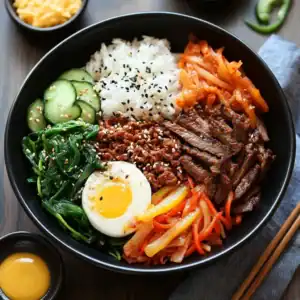
Divide the cooked white rice evenly between two bowls. Arrange the sautéed carrots, zucchini, and marinated beef on top of the rice in separate sections for a colorful presentation. Place a fried egg in the center of each bowl. Drizzle gochujang sauce generously over the top and sprinkle with sesame seeds for garnish.
8. Mix and Enjoy
Before eating, mix everything together thoroughly so the flavors meld. The creamy egg yolk, spicy gochujang, and savory beef create a symphony of taste in every bite. Serve immediately and enjoy!
Serving Suggestions
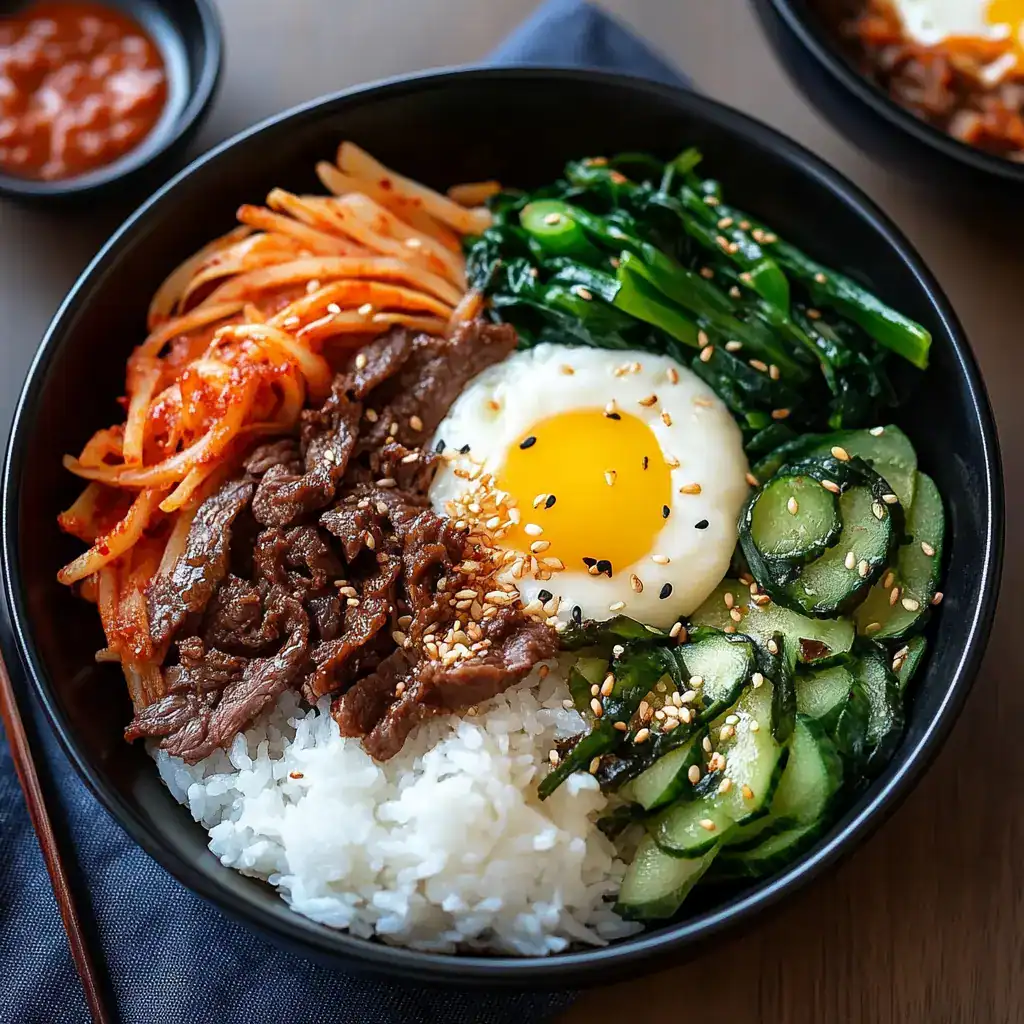
This Korean Beef Bibimbap Bowl is versatile and pairs well with a variety of sides and accompaniments. Here are some ideas to enhance your dining experience:
- Kimchi: Add a side of spicy kimchi for extra tang and crunch.
- Pickled Vegetables: Serve with quick-pickled cucumbers or radishes for a refreshing contrast.
- Seaweed Snacks: Crispy roasted seaweed sheets complement the dish beautifully.
- Steamed Greens: A side of blanched spinach or bok choy adds a nutritious boost.
For an added touch of elegance, consider garnishing the dish with extra chopped green onions or a sprinkle of red pepper flakes for color and heat.
Storage and Reheating Tips
If you happen to have leftovers (though we doubt there will be any!), proper storage is key to maintaining the dish’s quality. Store the components separately in airtight containers in the refrigerator for up to 3 days.
To reheat, warm the rice and beef in a skillet over medium heat, adding a splash of water or broth to prevent drying out. Reheat the vegetables gently to preserve their texture. Fry a fresh egg just before serving to ensure the yolk remains runny.
For meal prep enthusiasts, you can prepare the marinated beef and chop the vegetables ahead of time. Store them in the refrigerator and assemble the bowls just before serving for a quick and satisfying meal.
Frequently Asked Questions (FAQs)
Q: Can I use a different type of protein?
A: Absolutely! While beef sirloin is traditional, you can substitute it with thinly sliced chicken breast, turkey, or even tofu for a vegetarian option.
Q: What can I use instead of gochujang?
A: If you don’t have gochujang, you can use a combination of sriracha and miso paste for a similar spicy-savory flavor. However, gochujang is highly recommended for authenticity.
Q: How do I julienne the vegetables?
A: To julienne, cut the vegetables into thin strips about 2-3 inches long and 1/8 inch wide. A mandoline slicer or vegetable peeler can help achieve uniform cuts.
Q: Can I make this dish gluten-free?
A: Yes! Use tamari or coconut aminos instead of soy sauce, and ensure your gochujang is gluten-free. Serve the dish with gluten-free rice or quinoa.
Q: Is this dish spicy?
A: The spice level depends on the amount of gochujang you use. Start with 1 tablespoon and adjust to taste. You can also serve the gochujang on the side for those who prefer milder flavors.
Q: Can I add other vegetables?
A: Definitely! Feel free to include mushrooms, spinach, bean sprouts, or bell peppers. Just sauté them lightly to maintain their texture and color.
Final Thoughts
This Korean Beef Bibimbap Bowl is more than just a meal—it’s an experience. From the vibrant colors of the vegetables to the rich, savory flavors of the marinated beef and spicy gochujang sauce, every element comes together to create a dish that’s as beautiful as it is delicious. Whether you’re serving it for lunch, dinner, or a special occasion, this bibimbap bowl is sure to impress.
Ready to give it a try? Gather your ingredients, follow the steps, and let the magic unfold. Bon appétit!
Korean Beef Bibimbap Bowl
Ingredients
- 1/2 lb beef sirloin, thinly sliced
- 2 tablespoons soy sauce
- 1 tablespoon sesame oil
- 1 cloves garlic, minced
- 2 cups cooked white rice
- 1 carrot, julienned
- 1 zucchini, sliced
- 2 eggs
- 2 tablespoons gochujang (Korean chili paste)
- 1 teaspoon sesame seeds, for garnish
Instructions
- In a medium mixing bowl, combine soy sauce, sesame oil, and minced garlic. Add the thinly sliced beef sirloin, ensuring each piece is evenly coated. Marinate for at least 15-20 minutes.
- While the beef marinates, julienne the carrot into thin strips and slice the zucchini into thin half-moons. Keep them separate for sautéing.
- Heat a small amount of sesame oil in a skillet over medium heat. Add the julienned carrots and sauté for 2-3 minutes until slightly softened. Remove and set aside.
- In the same skillet, add a bit more sesame oil if needed, then sauté the zucchini slices for 2-3 minutes until tender but not mushy. Set aside with the carrots.
- Increase the heat to medium-high and add a small amount of sesame oil to the skillet. Add the marinated beef slices in a single layer and cook for 2-3 minutes per side, or until browned and cooked through. Remove and set aside.
- In a clean skillet, heat a small amount of oil or butter over medium heat. Crack the eggs into the skillet and fry them to your desired doneness. For bibimbap, a runny yolk is ideal.
- Divide the cooked white rice evenly between two bowls. Arrange the sautéed carrots, zucchini, and marinated beef on top of the rice in separate sections. Place a fried egg in the center of each bowl.
- Drizzle gochujang sauce generously over the top and sprinkle with sesame seeds for garnish.
- Mix everything together thoroughly before eating. The creamy egg yolk, spicy gochujang, and savory beef create a symphony of taste in every bite. Enjoy!